Silvio Cúneo’s text names a real wound. Not only because of the recent election results, but because of something deeper: the feeling that memory, accumulated pain, and certain basic convictions about human dignity no longer act as a bulwark against authoritarianism. This desolation is shared. It is not appropriate to deny or conceal it. The defeat exists and it hurts, especially when it seems to contradict a history we thought we had learned.
Silvio suggests that there are cultural experiences —literature, art, the sensitivity they awaken— that are difficult to reconcile with support for figures who defend state violence. We understand that sentiment. Culture, when it is genuine, expands our capacity to put ourselves in another’s place and makes any temptation to simplify the world in terms of order and punishment more complex.
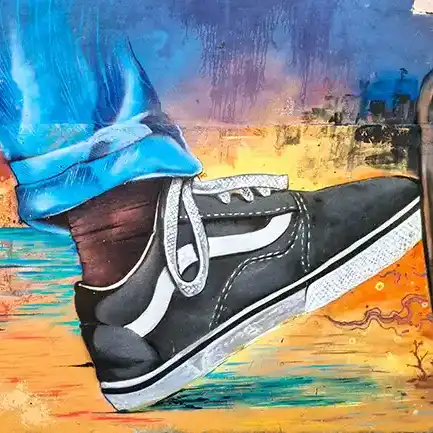
But perhaps we need to shift our focus a little. Chilean history shows that the great processes of transformation were not led by a society that was broadly enlightened in the classical sense. The Unidad Popular was built on high levels of functional illiteracy and low formal schooling, but with a very dense collective experience: unions, territories, daily exchange, social organization, popular art, music, theater, murals. Culture was not a consumer good or a symbolic credential; it was a way of being together and understanding conflict.
Perhaps the defeat we face today is not, first and foremost, a cultural defeat understood as a lack of access to books or enlightened references. Perhaps it is something more disturbing: a defeat of shared experience as a form of political knowledge. For years, politics narrowed its field of action until it was almost confined to parliament, the media, and increasingly self-referential rhetoric. In that process, struggle ceased to be a school and art ceased to be a common language, often becoming an ornament or a sign of belonging.
This shift has consequences. When politics separates itself from concrete life, when it ceases to offer spaces where pain, fear, and uncertainty can be collectively processed, other narratives fill the void. The far right advances not only through the force of its lies or its communicational power, but because it offers simple —and cruel— answers to real experiences of helplessness. It is not a question of justifying this advance, but of understanding it so as not to repeat the impotence.
In this sense, the problem is not only communicational, nor can it be solved with better slogans. It has to do with a deeper fracture: progressivism also stopped relying on culture, art, and social organization as spaces for sensitive and political education. This was not due to a lack of talent or good intentions, but because the idea that transformation occurs primarily at the institutional level became normalized. When that happens, politics becomes lightweight, even when its language is sophisticated.
However, even in this defeat, there is a crack. And through that crack, some light enters. Not an immediate promise of victory, nor an epic restoration, but a possible direction. History shows that bonds can be re-woven, that culture can regain its depth when it ceases to be a showcase and returns to being an encounter, when art is offered not as a closed identity but as a shared experience.
Perhaps the task at hand is not to quickly win over majorities, but to reinhabit the spaces where common life is thought and felt: territories, schools, cultural centers, unions, stages, conversations. Not to teach from above, but to learn together again. Memory is not imposed; it is cultivated. And the humanity of a society is not decreed: it is built on persistent practices, often small ones, that restore meaning where there was only noise.
Silvio’s text confronts us with a painful truth. Taking it seriously means not only lamenting defeat, but also asking ourselves how to make culture, struggle, and shared experience one and the same gesture again. Perhaps that is the most humble —and most necessary— way to let the light continue to shine through the crack.